

Introduction
Artificial Intelligence (AI) has emerged as a game-changer in the modern business landscape. With its ability to simulate human intelligence, Artificial Intelligence is revolutionizing industries and transforming the way businesses operate. In this article, we explore the importance of AI in shaping the future of business, highlighting its significant benefits and potential implications.
Table of Contents
How Artificial intelligence Can Enhance Efficiency and Productivity
Automating repetitive tasks: Artificial Intelligence technologies excel at automating mundane and repetitive tasks that consume valuable human resources. By leveraging machine learning algorithms and robotic process automation (RPA), businesses can streamline workflows, allowing employees to focus on more complex and creative endeavors.
Streamlining business processes: AI-driven systems analyze and optimize business processes, eliminating bottlenecks and inefficiencies. From supply chain management to inventory control, AI streamlines operations, reducing costs and enhancing overall efficiency.
Improving decision-making: Artificial Intelligence algorithms can analyze vast amounts of data, providing valuable insights for informed decision-making. By processing complex data sets, businesses gain a deeper understanding of customer behavior, market trends, and emerging patterns, empowering them to make data-driven decisions with confidence.
How Artificial Intelligence Can Improve Personalization and Customer Experience

Tailoring products and services: Artificial Intelligence enables businesses to personalize their offerings based on individual customer preferences and needs. By analyzing customer data, AI algorithms can recommend personalized products, increasing customer satisfaction and loyalty.
Delivering personalized recommendations: Artificial Intelligence-powered recommendation systems have become ubiquitous in e-commerce platforms, content streaming services, and social media platforms. These systems leverage machine learning to analyze user behavior and provide tailored recommendations, enhancing the overall customer experience.
Enhancing customer support: Artificial Intelligence chatbots and virtual assistants are revolutionizing customer support by providing instant assistance, 24/7. These AI-powered systems can answer customer queries, offer troubleshooting guidance, and provide personalized recommendations, delivering efficient and personalized customer service.
Mastering Data Analysis and Insights via Artificial Intelligence
Extracting valuable insights from large datasets: Artificial Intelligence excels at analyzing and extracting insights from large and complex datasets that would be impossible for humans to process manually. By leveraging AI-powered analytics tools, businesses can uncover valuable patterns, trends, and correlations hidden within their data.
Predictive analytics for better business forecasting: AI algorithms can predict future trends and behaviors by analyzing historical data patterns. This enables businesses to make accurate forecasts, anticipate market demands, and optimize their strategies accordingly.
Identifying patterns and trends: Artificial Intelligence technologies can identify subtle patterns and trends in data that humans might overlook. By spotting these insights, businesses can make proactive decisions, seize opportunities, and stay ahead of the competition.
Competitive Advantage
Gaining a technological edge: Businesses that embrace Artificial Intelligence gain a competitive advantage by leveraging cutting-edge technologies to improve their operations, products, and services. AI-powered companies are better equipped to adapt to market changes, meet evolving customer demands, and outperform their competitors.
Enhancing innovation and creativity: Artificial Intelligence can augment human creativity by generating new ideas, designs, and solutions. By automating repetitive tasks, AI frees up human creativity, allowing employees to focus on innovation and problem-solving, driving business growth and differentiation.
Improving operational efficiency: AI-driven automation and optimization improve operational efficiency, reducing costs, and increasing productivity. By leveraging AI technologies, businesses can achieve higher efficiency levels in manufacturing, logistics, and other critical business processes.
Cost Reduction and Resource Optimization
Minimizing manual labor costs: AI automation reduces the need for manual labor, minimizing labor costs associated with repetitive and mundane tasks. By deploying AI-powered robots and algorithms, businesses can achieve significant cost savings while reallocating human resources to higher-value tasks.
Optimizing resource allocation: AI algorithms can optimize resource allocation, ensuring optimal utilization of assets, workforce, and inventory. This leads to reduced waste, improved resource management, and increased profitability.
Reducing errors and improving accuracy: AI systems are inherently less prone to errors compared to humans. By minimizing human errors and improving accuracy, businesses can reduce costly mistakes, increase operational efficiency, and enhance the overall quality of their products and services.
Risk Management and Fraud Detection
Identifying potential risks and vulnerabilities: AI-powered systems can analyze vast amounts of data and identify potential risks and vulnerabilities in real-time. By continuously monitoring and analyzing data, businesses can proactively mitigate risks and implement necessary safeguards.
Strengthening cybersecurity measures: AI plays a crucial role in enhancing cybersecurity by detecting and responding to security threats in real-time. AI-powered systems can analyze network traffic, detect anomalous patterns, and protect sensitive business information from cyberattacks.
Detecting fraudulent activities: AI algorithms can identify patterns indicative of fraudulent activities, helping businesses combat financial fraud, identity theft, and other illicit activities. By leveraging AI-driven fraud detection systems, businesses can minimize financial losses and protect their reputation.
Ethical Considerations and Social Impact
Addressing bias and fairness in AI algorithms: AI algorithms are not immune to biases that exist in the data they are trained on. Businesses must ensure that AI systems are designed and trained to be fair, transparent, and unbiased to prevent unintended discrimination or harm.
Ensuring transparency and accountability: AI systems should be transparent, providing clear explanations for their decisions and actions. This fosters trust among stakeholders and ensures accountability, especially in critical applications such as healthcare, finance, and autonomous vehicles.
Nurturing responsible AI development: As AI continues to advance, businesses must prioritize responsible AI development. This involves ethical considerations, adherence to privacy regulations, and ongoing monitoring to prevent unintended consequences and ensure AI benefits society at large.
Job Transformation and New Opportunities
Shifting job roles and skill requirements: AI automation may lead to the transformation of certain job roles, requiring employees to acquire new skills to remain relevant. Businesses need to invest in upskilling and reskilling programs to empower their workforce for the AI-driven future.
Creating new job opportunities in AI-related fields: The rise of AI creates a demand for skilled professionals in AI development, data science, machine learning, and related fields. Businesses can tap into this opportunity by fostering a culture of innovation and attracting top talent in these emerging domains.
Upskilling and reskilling the workforce: To thrive in the AI era, businesses must prioritize upskilling and reskilling their employees. By investing in continuous learning programs and providing resources for skill development, businesses can equip their workforce to adapt and excel in an AI-driven business landscape.
The Future of Business with Artificial Intelligence
Integration of AI in various industries: AI is set to transform various industries, including healthcare, finance, manufacturing, retail, and more. Businesses across sectors are embracing AI to unlock new opportunities, drive innovation, and improve operational efficiency.
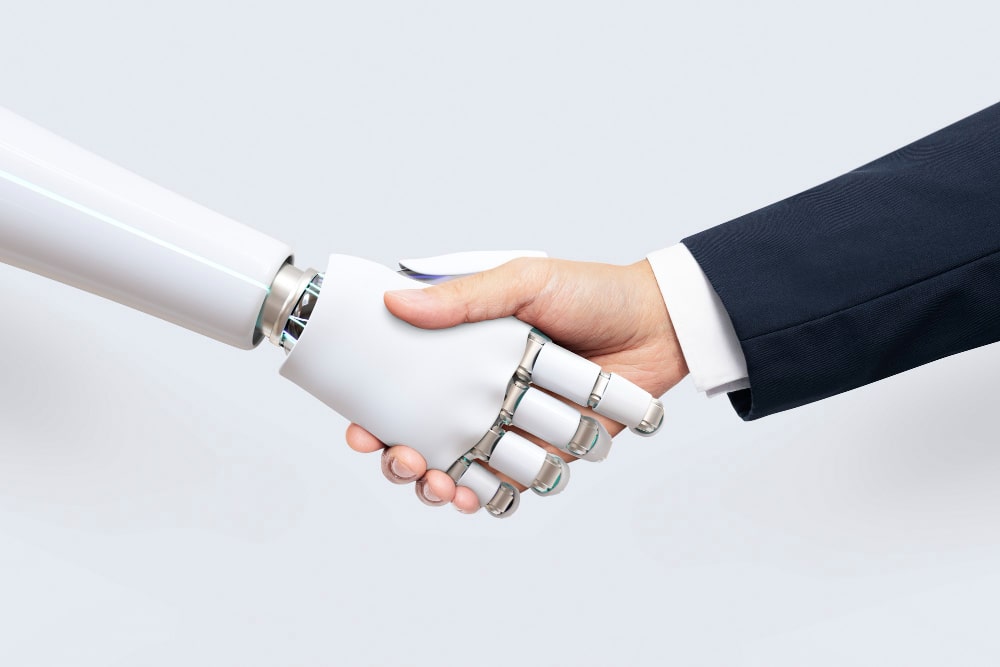
Collaborative efforts between humans and AI: The future of business lies in collaborative efforts between humans and AI systems. While AI automates repetitive tasks, humans bring creativity, critical thinking, and empathy to complex decision-making processes. By fostering human-AI collaboration, businesses can harness the full potential of both.
Potential challenges and ongoing research: Despite the numerous benefits, the adoption of AI in business also poses challenges such as ethical concerns, regulatory compliance, and the potential for job displacement. Ongoing research and collaboration among industry experts, policymakers, and academia are vital to address these challenges effectively.
Conclusion
Artificial Intelligence is poised to reshape the future of business, offering unprecedented opportunities for innovation, efficiency, and growth. By embracing AI technologies, businesses can enhance efficiency and productivity, personalize customer experiences, gain a competitive edge, optimize resources, mitigate risks, and create new job opportunities. However, it is essential to navigate the ethical considerations, foster responsible AI development, and ensure the collaborative integration of AI and human capabilities. The future of business is intertwined with AI, and it is crucial for businesses to embrace this transformative power to thrive in the evolving digital landscape.
Why is artificial intelligence important?
Artificial intelligence is important because it enables machines to perform tasks that typically require human intelligence, such as learning, reasoning, and problem-solving.
How does artificial intelligence impact various industries?
Artificial intelligence has a significant impact on various industries, including healthcare, finance, transportation, manufacturing, and customer service. It revolutionizes processes, improves efficiency, and enables new possibilities.
What are the benefits of incorporating artificial intelligence into business operations?
Incorporating artificial intelligence into business operations offers numerous benefits, such as streamlining workflows, automating repetitive tasks, improving accuracy, reducing costs, and enhancing customer experiences.
How does artificial intelligence enhance efficiency and productivity?
Artificial intelligence enhances efficiency and productivity by automating manual tasks, analyzing large amounts of data quickly, identifying patterns and trends, and optimizing processes based on real-time insights.
In what ways can artificial intelligence improve decision-making processes?
Artificial intelligence improves decision-making processes by providing data-driven insights, predictive analytics, and cognitive reasoning. It helps businesses make informed choices, identify risks and opportunities, and optimize outcomes.
How can artificial intelligence help in solving complex problems and finding innovative solutions?
Artificial intelligence helps in solving complex problems and finding innovative solutions by leveraging advanced algorithms, machine learning techniques, and data analysis. It assists in identifying patterns, making predictions, and generating insights beyond human capabilities.