

The license you choose should reflect how your business will operate, not just which setup looks simplest. If you’re researching how to get e-commerce license in the UAE, start by defining what you’ll sell and how you’ll reach customers. These details help identify suitable business activities and compare setup routes.
Free-zone and mainland setups involve different considerations. A license does not guarantee a visa or business bank account, and requirements and approvals depend on the relevant authority, bank and your circumstances.
This guide takes you from business idea to application. You’ll learn how to describe your activity, compare setup routes and prepare your information and documents. EasyWay Business Services supports company formation, business licensing and activity selection, as well as related visa and banking procedures.
Before seeking a recommendation, clarify what your business will do, who will own it, your preferred jurisdiction and whether you need visas. Be ready to share your nationality and residency status and desired timeline too. These details help make the next steps more practical.
Key Takeaways
- Describe what your online business will sell or provide so you can identify activities that reflect your plans.
- Compare free-zone and mainland routes against your ownership structure, target market, visa needs and operating model.
- To understand how to get e-commerce license in dubai, prepare shareholder and manager details and the documents relevant to your circumstances.
- Approach the application in sequence: define your activity, choose a suitable route, prepare documents and submit them for review.
- Plan for residency, banking and daily operations separately. A license does not guarantee visa or bank approval.
What an e-commerce license allows your online business to do
An e-commerce license is a business license linked to activities approved by the relevant authority. Its scope depends on the license and authority, so don’t assume the label covers every product or service you might offer. Understanding how to get e-commerce license in dubai starts with describing your actual business activity clearly.
In brief: An e-commerce license records approved activities for an online business. Matching the activities to your business model helps clarify what the license covers and what to discuss with the relevant authority.
Online selling can mean offering physical goods through a website or marketplace, or providing services digitally. The broad term E-commerce covers buying and selling through electronic networks. Your application, however, needs to describe your own business more precisely.
What business activity should an e-commerce license cover?
Will you sell physical goods, provide services or do both? Describe what customers will buy and how they will place orders or receive the service. For example, selling products through a website is a different operating model from delivering services online. The activity you select should reflect what your business will actually do. Available activities and approval depend on the relevant authority.
Before applying, prepare a clear description of:
- What your business will sell or provide.
- How customers will place orders or receive the service.
- Whether you plan to combine goods and services.
These details give your setup adviser a useful starting point for discussing activity and jurisdiction. Easyway Business Services provides business licensing and activity selection support to help you understand the available options.
What a license does not automatically provide
A license is one part of setting up a business. Residence or investor visa procedures are separate and have their own requirements and decisions. If you need a visa, include it in your planning rather than assuming it comes with every license.
Banking is separate too. A business license does not guarantee that a bank will open an account. The bank reviews each application under its own requirements. You’ll also need to plan operational tasks, such as preparing your website and payment processes. Keep the license scope in view and confirm applicable requirements with the relevant authority, since activities and approvals can vary.
E-commerce license: decisions to make before applying
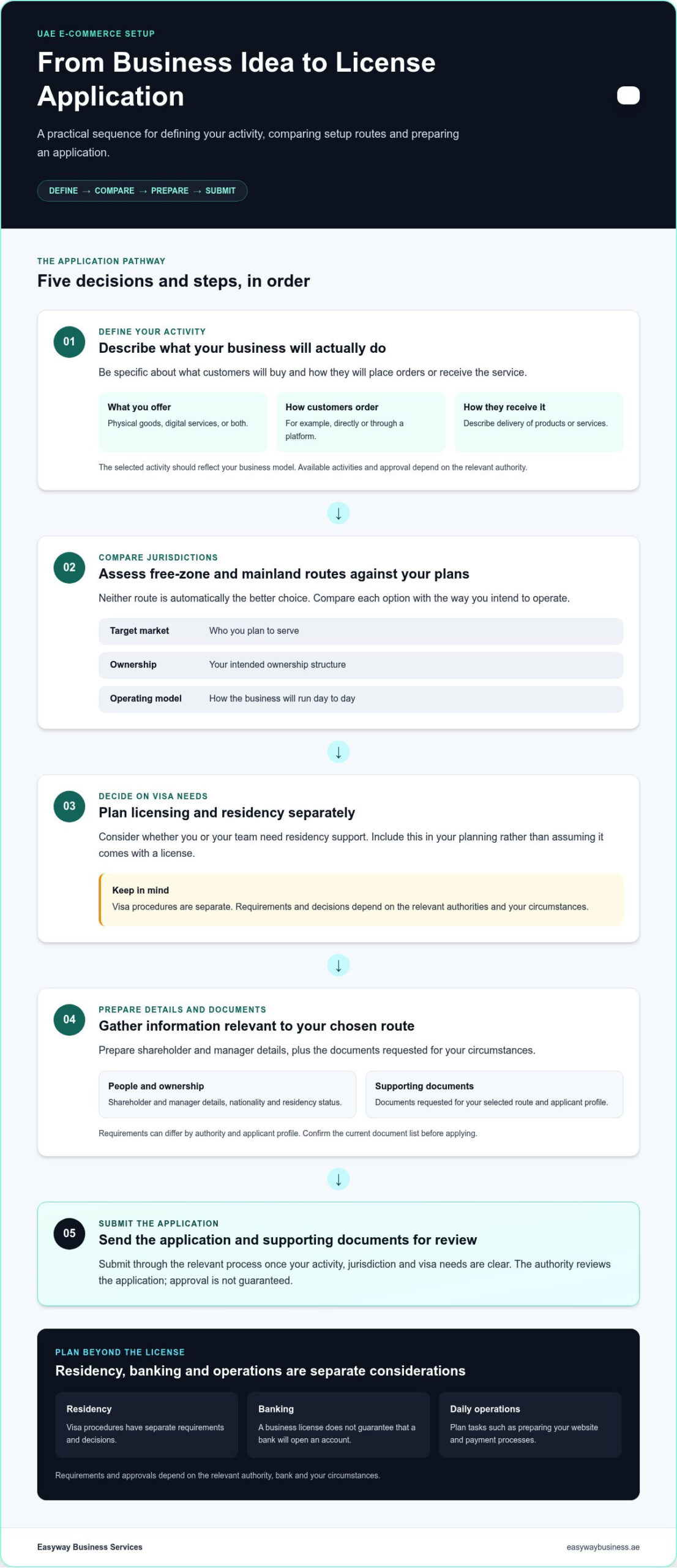
A clear plan makes it easier to compare setup routes and prepare a focused application. If you’re working out how to get e-commerce license in dubai, consider these decisions in order. The right route depends on your activity, ownership structure, target market and operating requirements, not simply on whether you sell online.
- Define your activity. Describe the goods or services you plan to offer, how customers will order and whether you’ll sell directly or through a platform. A specific description makes it easier to compare your plans with activities available from the relevant authority.
- Compare jurisdictions. Consider free-zone and mainland options against your intended market, ownership structure and day-to-day operating model. Neither route is automatically the better choice. For an overview of one free-zone approach, see this free-zone e-commerce license guide.
- Decide on visa needs. Will you or your team need residency support? Visa procedures are separate from the license decision, and eligibility and requirements depend on the relevant authorities and your circumstances. If you don’t need visa allocation, Easyway’s E-Commerce License – 0 Visa package is an option to consider. The advertised package and inclusions are subject to terms and conditions and should be confirmed with a consultant.
- Prepare your details and documents. Gather information about shareholders, nationality and residency status, along with documents requested for your chosen route. Requirements can differ by authority and applicant profile, so confirm the current list before applying.
- Submit the application. Once your activity, jurisdiction and visa needs are clear, submit the application and supporting documents through the relevant process. The authority reviews the application, and approval is not guaranteed.
Choose the activity and setup jurisdiction
Make your operating model concrete before comparing options. Note whether you’ll sell physical products, provide digital services or combine both. Then assess which jurisdiction and activity options align with your ownership plans and target customers. A free-zone route may suit some models, while a mainland route may fit others. Easyway Business Services supports company formation and activity selection to help you compare these factors. You can also read this e-commerce setup guide for another overview of a free-zone approach.
Decide whether you need visa allocation
Separate the company’s licensing needs from the residency needs of its founder or team. When asking for a tailored recommendation, share how many shareholders are involved, whether anyone needs visa support, and each applicant’s nationality and residency status. These details help frame the options, but immigration requirements and decisions remain separate from license issuance.
In short: Define your activity, compare jurisdictions, decide on visas, prepare documents and submit your application for review.
To discuss your activity, preferred jurisdiction, shareholder count, visa needs, nationality and residency status, and desired timeline, explore business setup guidance from Easyway Business Services.
Free-zone or mainland setup: how to compare your e-commerce options
If you’re researching how to get e-commerce license in dubai, don’t choose a setup route based only on an advertised price or stated timeline. Your business activity, ownership structure, visa needs and intended way of operating all matter. A package that looks straightforward may not match the activities or arrangements your business requires.
Use this comparison as a starting point, then confirm current activities, requirements and terms with the relevant authority. Free zones can differ from one another, and mainland setup has its own considerations.
| What to compare | Free-zone route | Mainland route |
|---|---|---|
| Activity fit | Check whether the relevant free zone offers activities that describe your products or services. | Check which activities and approvals apply to your intended business model. |
| Ownership structure | Compare the authority’s requirements with your planned shareholders and company structure. | Review the structure and ownership requirements for the proposed activity and setup. |
| Visa needs | Compare available arrangements with the founder’s and team’s residency plans. | Assess visa procedures separately from the license and against your circumstances. |
| Operating model | Consider how the business will sell, deliver and serve its intended customers. | Assess whether this route better fits your planned operations and target market. |
When a free-zone route may fit your plans
A free-zone option may be worth assessing if its activities, ownership structure and visa arrangements align with your plan. Compare the specific authority’s requirements rather than assuming all free zones offer the same conditions. Easyway Business Services supports free-zone company formation and can help you consider these factors.
For example, if you plan to sell a defined range of products online, check that the proposed activity reflects those products and how you intend to sell them. A free-zone license is one route to compare, not a universal answer.
When to assess a mainland route
Consider a mainland route alongside free-zone options if it appears more closely aligned with your intended operations. The right fit depends on your activity and individual requirements, so avoid relying on broad assumptions about ownership or approvals. Easyway Business Services supports Dubai Mainland commercial license setup as part of its company formation services.
Compare what each option covers, the activities available, visa needs and ongoing operating arrangements. Easyway can help you organize these details into a clearer setup recommendation. To discuss your business model and preferences, use the business setup enquiry page.
Documents and application steps for an e-commerce license
Preparing your information early makes it easier to follow the application process. If you’re researching how to get e-commerce license in dubai, treat any document checklist as a starting point, not a complete list. Requirements vary according to the authority, your chosen activity and jurisdiction, and your applicant profile.
Prepare your information and documents
Gather identity and visa details for each shareholder and manager, and check that the personal information you provide is consistent across the application. Typical documents include passport and visa copies. If you’re a UAE resident, a No Objection Certificate (NOC) may also be required when applicable.
Use this preparation list to organize information you may be asked to provide:
- Passport and visa copies for shareholders and managers.
- Personal information for the applicants and details of the proposed business activity.
- A NOC for a UAE resident, if it applies to the applicant and setup route.
- Any additional documents requested by the relevant authority.
This is general guidance, not an exhaustive checklist or legal advice. An authority may request further documents based on your activity, jurisdiction, shareholder details or visa status. Easyway Business Services can help organize company documentation, but confirm the current requirements for your application before submitting documents.
What happens after you submit an application?
The process generally moves from sharing your business and applicant details to reviewing requirements, providing requested documents, submitting the application and responding to authority updates. Watch for communications so you can address requests for clarification or additional information through the relevant process.
Requirements, documents, eligibility and outcomes depend on your application, applicant profile, business activity and the relevant authority, which makes its own review and approval decisions. Submission does not guarantee that a license will be issued or that it will cover activities beyond those approved. Procedures can also vary between authorities, so another applicant’s checklist is not a definitive guide.
Easyway Business Services helps with licensing steps and the applicant details relevant to your setup. For guidance based on your activity, jurisdiction, shareholder count, visa needs, nationality and residency status, and desired timeline, discuss your license application.
After the license: plan visas, banking and business operations
A license is an important setup milestone, but it does not automatically provide residency, a bank account or approval for other arrangements. Plan these as separate steps so you can prepare for the practical work of launching your online business.
Map out what your business needs to operate. This may include reviewing residency needs, preparing a bank application, building your website, arranging payment methods and setting up ongoing administration. The exact requirements depend on your business and the relevant authorities or service providers.
Plan banking and residency as separate processes
A bank makes its own decision on each business account application. Eligibility checks, document requirements and compliance reviews may depend on the business and applicant profile, so a license does not guarantee account approval. Easyway Business Services provides corporate bank account assistance, including support for digital business bank accounts. The bank makes the final decision, based on its own checks and requirements.
Residency or visa procedures are also separate from license issuance. If you or your team need visa support, include that in your setup planning. Requirements and decisions may vary according to individual circumstances and the relevant authority. Easyway supports residency and immigration procedures connected with business setup.
Next, plan your operating essentials. Prepare your website and customer information, select payment methods suited to your business, and keep track of ongoing administrative responsibilities. Easyway also provides digital services such as website development and e-commerce website solutions, along with payment gateway integration. These steps support launch planning but don’t replace requirements that apply to your license or activity.
Get a recommendation based on your business details
A useful recommendation starts with the facts that shape your setup. Be ready to share your intended activity, preferred jurisdiction, number of shareholders, required visas, nationality and residency status, and desired timeline. These details help clarify which routes may suit your plans. Requirements, fees, eligibility and timelines can vary by authority and applicant profile.
Easyway Business Services supports company formation, licensing, activity selection, residency procedures and bank account assistance. The company reports forming more than 2,000 companies in the UAE and working with more than 20 Free Zone authorities. Easyway can help make the setup steps easier to understand, while licensing, visa and banking decisions remain with the relevant authorities and banks.
For guidance based on your business details, discuss your setup requirements with Easyway Business Services.
Take the next step with a clear setup plan
Set up your e-commerce business around how you intend to operate. Your activity should reflect the goods or services you’ll offer. Your choice between free-zone and mainland routes should account for ownership, customers, visa needs and operating requirements. Preparing applicant details and documents before applying can also help you approach the process with greater clarity.
Your plan for how to get e-commerce license in dubai should treat the license as one milestone, not a guarantee of a visa, bank account or other approval. Requirements and decisions can vary by authority, bank and individual circumstances. Easyway Business Services supports licensing, activity selection and related setup steps. The company reports forming more than 2,000 companies in the UAE and working with more than 20 Free Zone authorities.
For guidance shaped around your activity, preferred jurisdiction, shareholders, visa needs, nationality and residency status, and desired timeline, discuss your e-commerce setup requirements with Easyway. Share these details to take the next step with a clearer plan.
Frequently Asked Questions
How do I get an e-commerce license in the UAE?
Start by defining what your business will sell or provide. Then compare free-zone and mainland routes against your ownership, customer market and operating needs. Decide whether you need visa allocation, gather the applicant details and documents requested for your route, and submit the application to the relevant authority. If you’re learning how to get e-commerce license in dubai, remember that requirements and approval decisions depend on the authority and your circumstances.
What documents are typically needed for an e-commerce license application?
Typical documents include passport and visa copies for shareholders and managers, plus personal information for the applicants. A UAE resident may need a No Objection Certificate (NOC) when applicable. This is a starting point, not a complete checklist. The authority may request additional documents based on your activity, jurisdiction, shareholder profile and visa status. Confirm current requirements before submitting documents.
Do I need a visa with an e-commerce license?
No. A visa isn’t automatically required with every e-commerce license. Your visa needs depend on your circumstances and plans, and residency procedures are separate from license issuance. Easyway offers an E-Commerce License – 0 Visa package for businesses that do not need visa allocation. The advertised package and inclusions are subject to terms and conditions and should be confirmed with a consultant. Visa eligibility and decisions depend on the relevant authority and applicant profile.
Can I apply for an e-commerce license without choosing a free zone first?
You can explore your setup options before selecting a jurisdiction, but you’ll need to identify the route that fits your business before submitting an application. Compare free-zone and mainland options based on your activity, ownership structure, target market, visa needs and operating requirements. Available activities and application requirements vary by authority. Easyway can help you assess these details before you proceed.
Does an e-commerce license guarantee a business bank account?
No. A license doesn’t guarantee that a bank will open an account for your business. Banks conduct their own eligibility and compliance reviews and may request documents based on the business and applicant profile. Easyway provides bank account assistance to help you understand and prepare for the application process, but the bank makes the final decision. Plan banking as a separate step after licensing.
Can Easyway help me choose between free-zone and mainland setup?
Yes. Easyway can help you compare routes based on your intended activity, ownership structure, visa needs, target market and operating requirements. For a tailored recommendation, be ready to share your preferred jurisdiction, number of shareholders, required visas, nationality and residency status, and desired timeline. Easyway reports working with more than 20 Free Zone authorities. The relevant authority sets its requirements and makes approval decisions for your application.
How much does an e-commerce license cost?
The cost depends on the jurisdiction, activity, visa needs and other requirements, so there isn’t one price for every business. Easyway advertises free-zone packages at AED 4,000 for an E-Commerce License – 0 Visa, AED 8,500 for a Freezone License – 1 Visa, and AED 12,500 for a Freezone License – 2 Visas. These offers are subject to terms and conditions. Confirm current pricing and inclusions with a consultant.