

You can establish a company in the SPC Free Zone without a physical office, and setup can require zero paid share capital. Foreign investors can own 100% of a free zone company. These features make the SPC Free Zone worth considering if you want flexible ownership and workspace arrangements for your UAE business.
Choosing the SPC Free Zone is only one part of setting up a business. You’ll also need to match your planned activities to a suitable licence, decide who will own the company, and consider whether you need visas or workspace. Costs depend on your licence and visa requirements, so request a tailored quote based on your plans.
This guide covers key considerations for setting up in the SPC Free Zone, including activities, ownership, office arrangements, and factors that affect formation costs. Use it to assess how this option fits your plans and what information to prepare before taking the next step.
Key Takeaways
- Match your planned business activities to the licence scope so your setup aligns with the work you intend to do.
- Check the owner’s age before applying: the stated minimum is 18, while some licences require applicants to be at least 21.
- Plan the ownership structure early. An SPC Free Zone FZC can have up to seven individual or corporate shareholders, or a combination of both.
- Use the five-to-seven-day registration timeframe as a planning guide, and account for the licence and visa options that shape your setup package.
- Compare your needs with EasyWay Business Services’ E-Commerce License 0 Visa and free zone licence options with one or two visas.
Is office space mandatory to start a business in Sharjah Publishing City?
No. The SPC Free Zone FAQ says a physical office is not compulsory to set up a business. This can help founders avoid committing to a dedicated workplace before deciding how their team will operate. However, the licensing requirement is separate from the practical workspace needs of your business.
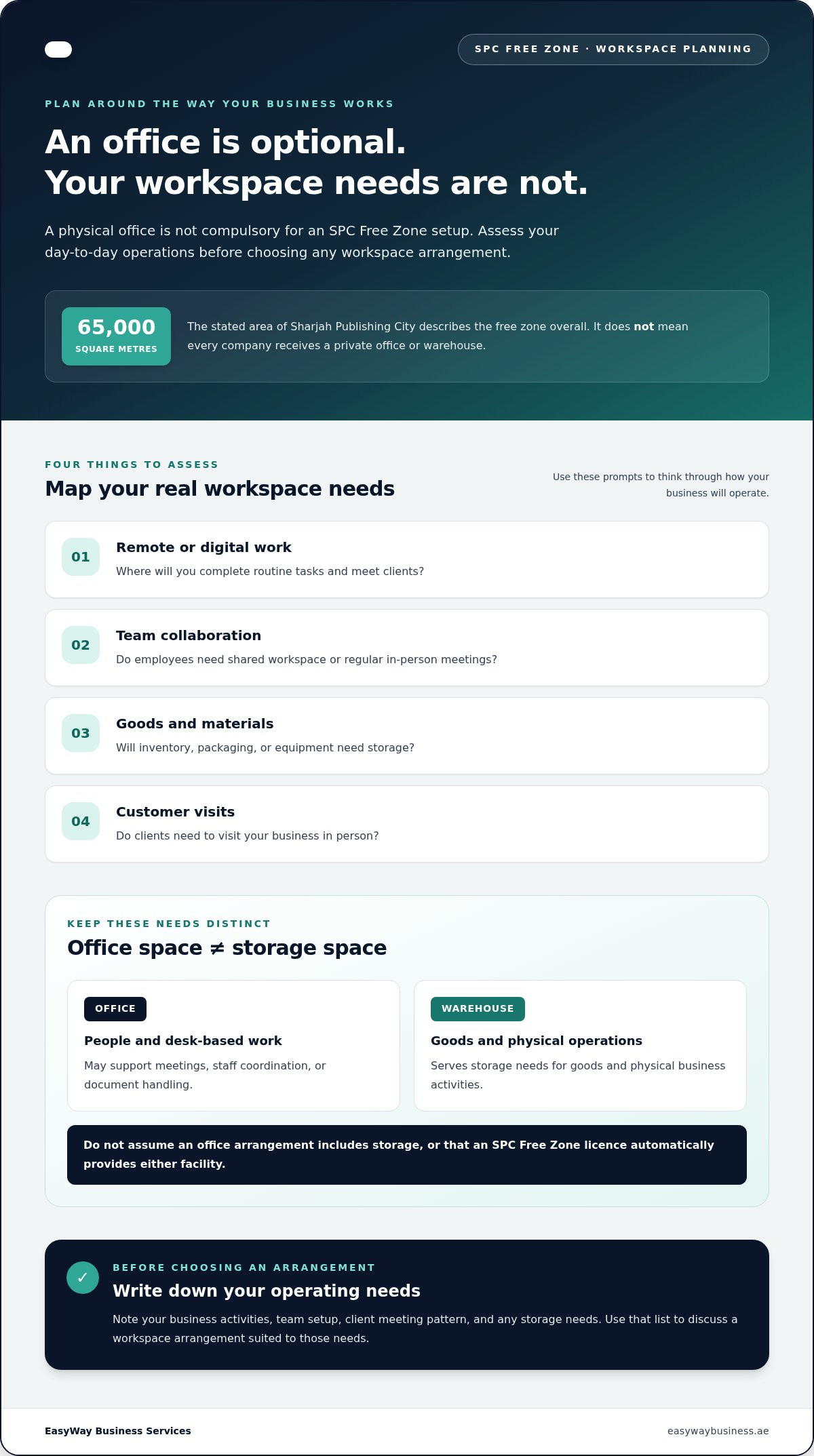
Sharjah Publishing City covers 65,000 square metres, but that figure describes the free zone’s overall area. It does not establish that every company receives a private office or warehouse. Before choosing a setup, map out the work your business will perform. A consultant working remotely has different space needs from a seller storing products or a publisher managing physical stock.
Use this simple assessment before selecting an office solution:
- Remote or digital work: List where you’ll complete routine tasks and meet clients.
- Team collaboration: Decide whether employees need a shared workspace or regular in-person meetings.
- Goods and materials: Identify whether your operations involve inventory, packaging, or equipment.
- Customer visits: Consider whether clients need to visit your business in person.
Distinguish between a legal setup requirement and an operational choice. An office can support meetings, staff coordination, or document handling. A warehouse serves a different purpose: storing goods and supporting physical operations. Don’t assume an office arrangement includes storage, or that an SPC Free Zone licence automatically provides either facility. Define what you need, then ensure the proposed arrangement suits that use.
Compare any office arrangement with your working model, considering its purpose, access, and space. A founder who meets clients online may not need a dedicated room, while a team holding regular in-person sessions may value shared workspace. A business handling physical products should plan storage separately from desk space. These examples are planning distinctions, not claims about specific SPC facilities.
Before committing, write down your activities, expected team setup, client meeting pattern, and any storage needs. Then use that list to discuss the appropriate workspace arrangement during formation. For a separate Sharjah setup overview, the SHAMS Free Zone page covers another free-zone option. Keep the comparison focused on your actual activity and workspace requirements, rather than assuming that all Sharjah zones offer identical arrangements.
The practical takeaway is clear: the SPC FAQ says a physical office is not compulsory, but suitable workspace may still matter to your operations. Decide whether you need desks, meeting space, storage, or a combination. This distinction helps you plan your SPC Free Zone setup without treating an optional office as a universal requirement.
Is office space mandatory to start a business in Sharjah Publishing City?
No. The SPC Free Zone FAQ says a physical office is not compulsory for setting up a business. This lets founders plan workspace around their actual operations rather than assume a dedicated office is essential. Still, the office rule does not remove practical workspace needs. Separate the licensing requirement from the space your team needs to work effectively.
Sharjah Publishing City covers 65,000 square metres, but that describes the free zone’s overall area. It doesn’t mean every company receives a private office or warehouse. Before choosing an SPC Free Zone setup, map out your daily work. A remote consultant needs different space from a seller storing products or a publisher handling physical stock.
Use this assessment before choosing an office solution:
- Remote or digital work: Identify where you’ll complete routine tasks and meet clients.
- Team collaboration: Decide whether employees need shared workspace or in-person meetings.
- Goods and materials: List inventory, packaging, or equipment that needs storage.
- Customer visits: Consider whether clients need to visit your business.
This assessment separates licensing from operational needs. An office can support meetings, staff coordination, or document handling. A warehouse serves another purpose: storing goods and supporting physical operations. Don’t assume an office arrangement includes storage, or that an SPC Free Zone licence automatically provides either facility. Define your needs, then match the proposed arrangement to them.
For any office arrangement, compare its purpose, access, and space with your working model. A founder who meets clients online may not need a dedicated room, while a team holding regular in-person sessions may prefer shared workspace. A business handling physical products should plan storage separately from desk space. These examples help assess your needs, not identify specific SPC facilities.
Before committing, list your activities, team setup, client meeting pattern, and storage needs. Use that list when discussing workspace for your company formation. For a separate Sharjah setup overview, the SHAMS Free Zone page covers another free-zone option. Compare the actual activity and workspace requirements, rather than assuming all Sharjah zones offer identical arrangements.
The practical point is straightforward: a physical office isn’t compulsory under the stated FAQ, but suitable workspace may still matter to your operations. Decide whether your SPC Free Zone business needs desks, meeting space, storage, or a combination. This helps you plan sensibly without treating an optional office as a universal requirement.
Eligibility requirements for business owners
Age is a practical starting point for checking eligibility at Sharjah Publishing City. The stated minimum age for an SPC Free Zone business owner is 18 years. Some SPC licences require applicants to be 21 years old. Identify your intended licence first, then compare its age threshold with each proposed owner’s age before preparing the application.
Eligibility depends on the business model as well as the owner. A publishing entrepreneur, an editor, and an online seller may need different activities under their companies. Write down what the business will provide, who will own it, and where the work will take place. These details help align the owner’s plans with the licence application.
Sharjah Publishing City is a natural place to consider for businesses connected with publishing and related creative work. Examples include a publishing venture, an editorial service, or a business producing digital content. These are illustrative business models, not a guarantee that every activity fits a particular licence. The activity description and licence scope need to match the actual work.
The business’s location can also shape its operating plan. Consider where customers are based, how services will be delivered, and whether the business needs in-person meetings or a remote workflow. For example, an independent editor serving clients online may organise operations differently from a publisher handling physical books. Set out these practical details before choosing the company structure.
Include banking in your preparation. A business account can help separate company transactions from personal spending and organise payments to customers and suppliers. Prepare a consistent description of the company’s activity, ownership, and expected transaction purpose for the account-opening process. Banks assess applications independently, so company formation and account opening are separate decisions.
Use this short eligibility and readiness checklist:
- Confirm the owner’s age: Check whether the relevant threshold is 18 or 21 years.
- Describe the business: Explain the service or product in specific terms, such as editing or digital publishing.
- Identify the owners: Record who will hold ownership and take part in the company.
- Plan financial operations: Note how customers will pay and how the company will manage supplier payments.
This preparation helps you connect the owner, licence activity, and banking plan before formation begins. A clear example, such as an 18-year-old founder planning an online editorial service, makes the age and activity questions easy to identify. If the chosen licence has a 21-year minimum, that applicant would not meet its stated age threshold. A different licence with an 18-year minimum would involve a separate activity and eligibility assessment.
Free zone company ownership
Foreign investors can own 100% of a company licensed by SPC Free Zone. This ownership option lets overseas founders hold the full company interest. The right structure still depends on how many owners are involved and how they want to organise decision-making. Settle those points before preparing company documents.
An SPC Free Zone FZC can have up to seven shareholders. Shareholders may be individuals, corporate entities, or a combination of both. For example, two founders and one holding company fit within that stated structure. Record each shareholder’s role and proposed ownership clearly before applying.
How does SPC Free Zone compare with other Sharjah and UAE free zones? Compare the permitted activities, ownership structure, workspace options, and setup package against your business needs. SPC Free Zone’s 100% foreign ownership and FZC structure provide specific points for that comparison, but they don’t make every zone equivalent.
Ownership planning is both practical and administrative. A sole founder may prioritise direct control, while co-founders may need agreed decision rights. A corporate shareholder adds an entity to the ownership structure. Write down who owns shares, who makes decisions, and how the company will handle future changes.
What are the tax, VAT, and corporate tax rules for SPC Free Zone companies? Sharjah Publishing City advertises a zero corporate and personal income tax rate. That headline alone does not determine a company’s tax treatment or VAT position. Assess these separately in light of the business’s circumstances and applicable UAE requirements.
Keep the distinctions clear when planning finances. VAT concerns transactions and is separate from income tax, while an advertised rate alone does not establish corporate tax treatment. A publishing company selling products and an editorial consultancy providing services can have different transaction profiles. Keep accurate records of revenue, expenses, and sales activity for review.
What are the main risks, renewal fees, and ongoing compliance requirements for SPC Free Zone companies? Key risks include ownership records that do not reflect the agreed structure, activities that differ from the licence, and missed renewal steps. Renewal fees depend on the selected licence and company setup, so include renewal planning in your budget.
Use this ownership checklist before formation:
- Choose the structure: Decide whether the company will be an FZC.
- List shareholders: Identify each individual or corporate owner.
- Document ownership: Record the agreed shares and decision roles.
- Plan administration: Track licence details, company records, and renewal dates.
A clear ownership plan helps align the licence, company records, and financial administration. For example, a venture with individual founders and a corporate shareholder should document both types of ownership consistently. Review the structure alongside planned activities and ongoing obligations before proceeding.
SPC Free Zone company formation and package price
Start formation planning with your activity, ownership structure, and operating needs. SPC Free Zone states that company registration takes five to seven days. Treat this as the stated registration timeframe, not a promise that every application will be completed within that period. Prepare your business details before beginning the process.
SPC Free Zone also states that companies can be set up with zero paid share capital. This means paid share capital is not required for setup, but company formation still involves costs. Licensing, visa choices, and any selected facilities can affect the total package price.
Use a clear sequence to prepare your application:
- Define the activity: Describe the services or products your company will provide.
- Set the ownership structure: Identify the shareholders and their intended roles.
- Choose setup requirements: Decide whether your plan includes visas or workspace needs.
- Review the package: Compare the quoted inclusions with your actual requirements.
Package prices depend on the case and are provided after a quote request. Cost factors include the licence activity, shareholder structure, visa requirements, and selected office or facility arrangements. For example, a founder seeking a licence without visas has different setup needs from a company planning staff visas and workspace. Compare the scope of each quote, not just its headline total.
Ask for a clear breakdown of the setup components in your quote. Check which formation steps are covered, which selected options add cost, and whether recurring items need separate budgeting. For example, distinguish initial formation expenses from future renewals. This makes your first-year business budget more useful and avoids treating every package as identical.
The stated five-to-seven-day registration timeframe can help with planning, but preparation matters. Keep activity descriptions and shareholder details consistent across application documents. If you change the proposed activity or ownership during preparation, update the relevant information before proceeding. This can reduce avoidable back-and-forth and give the application a coherent basis.
Before requesting a quotation, write down your activity, shareholder details, visa needs, and workspace plan. Use the same requirements when comparing package options. This makes it easier to see which setup fits your business and understand how each choice affects the price.
For a tailored breakdown, request an SPC Free Zone setup quotation with your activity and requirements.
EasyWay Business Services: E-Commerce License 0 Visa
EasyWay Business Services can help you compare UAE company formation options against your planned activity and visa needs. Its offerings include an E-Commerce License 0 Visa, free zone licences with one or two visas, and a Dubai Mainland commercial License.
If your business is online, the E-Commerce License 0 Visa may be a relevant option to discuss. If you need a free zone setup with visa provision, compare the one-visa and two-visa options with your team’s plans. Businesses considering mainland operations can explore the Dubai Mainland commercial License.
Share your activity, ownership plan, and setup requirements to make the discussion practical. Contact EasyWay Business Services to discuss which option fits your business plans.
Move from planning to a setup that fits
Your next step is to turn your business idea into a clear formation plan. Decide how you’ll operate, who will own the company, and what support your business needs as it starts. These choices help you compare an SPC Free Zone setup with other UAE options based on your actual plans, not just the licence label.
EasyWay Business Services can help you understand suitable company formation options and the steps involved. Its offerings include an E-Commerce License 0 Visa, a Freezone license with one visa, and a Freezone license with Two visa. Share your intended activity and setup priorities to make the discussion specific to your business. Requirements and approvals can vary with the activity and your circumstances.
Take the next step when you’re ready to discuss your plans. Contact EasyWay Business Services today to explore a suitable path forward. With your priorities clearly set, you can approach your UAE launch with greater confidence.
Frequently Asked Questions
Why set up a business with SPC Free Zone?
SPC Free Zone may suit founders considering a Sharjah base and flexible workspace planning. For a publishing entrepreneur, its publishing focus may be relevant to the business concept. Look beyond the zone name: compare your activity, ownership structure, customer locations, workspace needs, and visa plans. This practical comparison helps you assess whether the setup supports how your business will operate.
What is SPC Free Zone in Sharjah, UAE?
SPC Free Zone is Sharjah Publishing City, a free zone in Sharjah, United Arab Emirates. It describes itself as the world’s first publishing free zone and covers 65,000 square metres. For a founder, the key point is that it provides a free-zone setting for company licensing. Its publishing identity may be especially relevant to businesses working in publishing and related fields.
What business activities and company types can be registered in SPC Free Zone?
Companies can apply for licences tied to their intended business activities, while the company structure determines ownership. An SPC Free Zone FZC can have up to seven individual or corporate shareholders, or a combination. For example, a structure could include individual founders alongside a corporate shareholder. Describe your actual services or products clearly so the proposed activity and company records align.
What are the current SPC Free Zone license packages and prices?
There isn’t one package price for every SPC Free Zone company. The total depends on the selected licence activity, visa requirements, and any chosen workspace or related services. Request a quotation based on your intended business model and compare its inclusions with your planned setup. Budget for formation costs and later renewal expenses separately.
What are the costs for visas, establishment cards, and other SPC Free Zone services?
Visa and establishment-card costs depend on the selected setup and the services the company needs. Build your estimate around the number of visas, licence activity, and any additional administrative or workspace requirements. For example, a founder with no staff visa requirement has different planning needs from a business preparing employee residency applications. Request an itemised quotation to understand the relevant cost components.
What documents are required to set up a company in SPC Free Zone?
Typical documents include passport and visa copies for shareholders and managers, plus personal information for the manager and shareholders. A UAE resident may need a No Objection Certificate, or NOC, where applicable. Gather each owner’s identification details before starting the application. Further documents depend on the activity, authority, shareholder profile, and visa status, so keep information consistent throughout the application.
What are the steps and timelines for SPC Free Zone company formation?
Begin by defining the business activity and ownership structure, then prepare the applicant details and submit the application. You can provide up to three trade-name options for selection. SPC Free Zone states that company registration takes five to seven days. Use that stated timeframe for planning, and organise documents and decisions early to keep application details complete and consistent.
Does SPC Free Zone require a physical office or allow flexi-desk and virtual office options?
According to the SPC Free Zone FAQ, a physical office is not compulsory for setting up a business. A dedicated office is therefore not a universal setup requirement. Plan your working arrangement around actual needs, such as client meetings, staff collaboration, or product storage. A business that mainly serves customers online may need a different workspace from one handling physical goods.