
The hidden costs of business setup in Dubai are expenses that may sit outside your initial licence budget. Banking, visa processing, an establishment card, PRO support and activity-specific approvals can affect the total, depending on your business requirements.
It’s easy to focus on the licence and overlook the steps needed to make your company operational. The overall price depends on factors such as your business activity, visa needs and required approvals, and is provided after a quote request.
This guide explains what these additional costs cover and when they may apply. You’ll also learn how to plan for banking and ongoing administration, so you can build a clearer setup budget before moving forward.
Key Takeaways
- Separate licence costs from workspace expenses: a flexi-desk or mainland office can add a substantial amount to your first-year budget.
- Plan for banking costs beyond account setup, including a minimum balance that varies by bank.
- Count visa processing and the establishment card as separate budget items, especially if you need visas for more than one person.
- Allow for PRO support and activity-specific approvals where your business activity requires additional government processing.
- Break out recurring and one-off expenses so you can see what affects your launch budget and what continues after setup.
1. What Are the Hidden Costs of Business Setup in Dubai?
The hidden costs of business setup in Dubai can include workspace and renewal requirements beyond the initial licence.
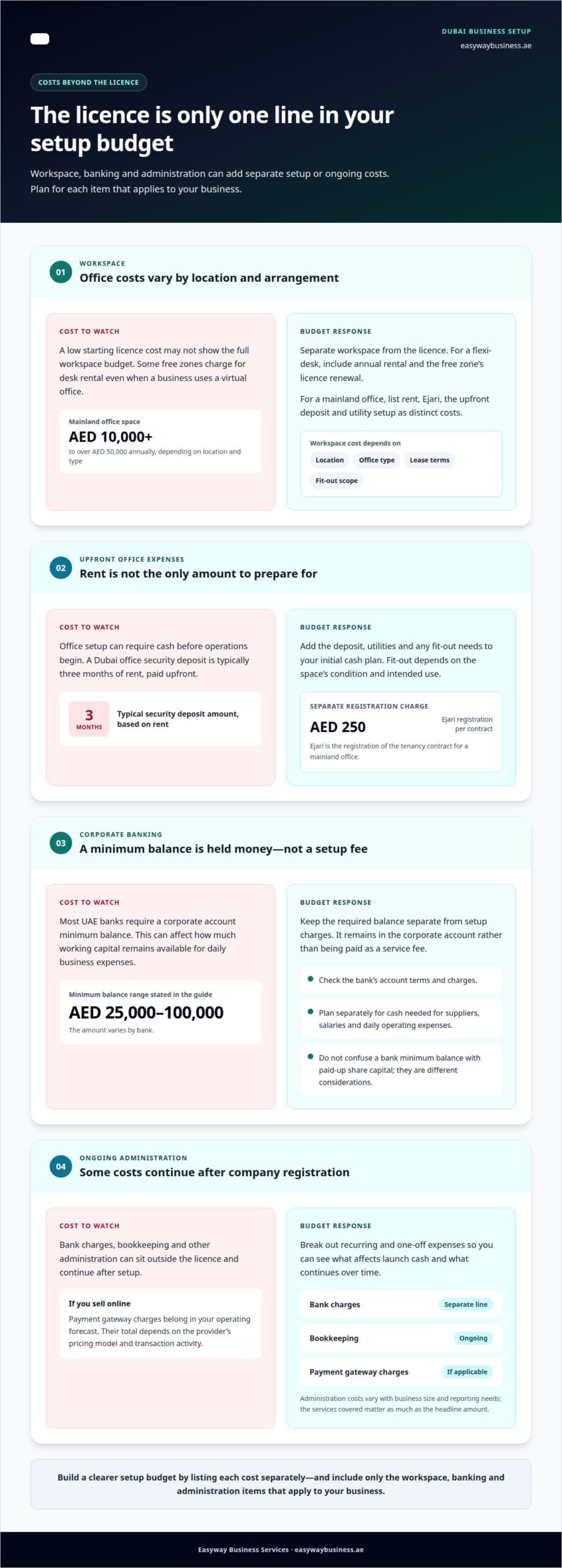
For a free-zone company, the office arrangement affects both setup and ongoing costs. Some free zones charge for desk rental even when a business uses a virtual office, so a low starting licence cost may not reflect the full workspace budget.
Mainland companies have different office requirements. Mainland office space can cost AED 10,000 to over AED 50,000 annually, depending on location and type. A mainland office also needs Ejari registration, the registration of its tenancy contract. Ejari is listed at AED 250 per contract, adding a separate charge to rent.
Office costs can include upfront and ongoing expenses. A Dubai office security deposit is typically three months of rent, paid upfront. The deposit and utility arrangements affect how much cash you need before operations begin.
Fit-out costs depend on the condition and intended use of the space. A ready-to-use office may need less work than a unit requiring partitions, furniture or business-specific changes. Build these requirements into your initial budget alongside rent, deposits, Ejari and utilities. The final workspace cost depends on the location, office type, lease terms and fit-out scope; a case-specific quote sets out the relevant figure.
In practice, a flexi-desk budget should account for its annual rental and the free zone’s licence renewal. A mainland office budget should include annual rent, Ejari, the upfront deposit and utility setup. These are distinct cost lines, not one combined licence charge. If you are planning a Dubai mainland setup, office selection is one of the factors shaping the total.
To estimate free-zone setup and annual renewal together, include the licence cost and any workspace charge, then budget separately for renewal. Renewal costs vary by activity and visa count, while flexi-desk costs depend on the chosen free zone and workspace arrangement. No single total applies across all free zones.
2. Are Bank Account and Financial Administration Costs Part of the Setup Budget?
Yes. Budget separately for bank charges, any required minimum balance, bookkeeping and mainland sponsorship. These costs sit outside the licence and can continue after company registration, so include them in your financial breakdown from the start.
These figures describe different arrangements. Identify which relationship applies to your jurisdiction and activity before adding a sponsorship line to a package comparison.
Banking can involve two distinct expenses: account charges and assistance with the application. These are not interchangeable. The bank’s own charges and the services involved determine which costs apply.
Minimum balance requirements also affect working capital. Most UAE banks require a corporate account minimum balance of AED 25,000 to AED 100,000. This money is held in the account rather than treated as a service fee. Keep it separate in your budget from setup charges, and account for it when planning cash available for rent, suppliers and payroll.
Does a Dubai company need paid-up capital? Requirements depend on the company’s jurisdiction, activity and legal structure. Don’t confuse a bank’s minimum balance with paid-up share capital: they are different budget considerations, and a bank balance requirement does not itself establish a company’s capital requirement.
Set aside an annual allowance for ongoing administration. Costs vary with business size and reporting needs, so the services covered matter as much as the headline amount.
Payment gateway charges also belong in your operating forecast if you sell online. The total depends on the payment provider’s pricing model and transaction activity, so separate transaction charges from bookkeeping expenses. For a clearer view of your business bank account opening needs and related setup steps, discuss your banking requirements as part of your company planning.
3. Corporate bank account minimum balances
A bank’s minimum balance can affect how much working capital your business can use. Treat it as money kept in the corporate account, not as a fee paid during company formation. The required amount and account charges depend on the bank and account terms. Keep these funds separate from the cash set aside for suppliers, salaries and daily operating expenses.
Banks also review a company’s business activity and ownership structure. A clear description of expected transactions helps explain how the account will support your operations. For example, a trading company receiving customer payments may need to describe its expected payment flows differently from a consultancy billing clients for services.
Foreign corporate shareholders may need to prepare documents for use in the UAE. The relevant documents and steps depend on the shareholder’s country and company structure. Organise corporate records and identity documents early to avoid unexpected document-preparation costs during the banking process.
Keep tax administration separate from bank account planning. Corporate tax and VAT involve different considerations, and obligations can depend on a company’s activities and financial position. Don’t assume that opening an account completes any tax-related steps. For guidance on how tax requirements apply to your circumstances, speak with an EasyWay consultant or the appropriate UAE authority.
Good records make financial administration easier. Keep invoices, payment records and business expense documents organised from the beginning. A company with frequent transactions may need a different bookkeeping routine from one with occasional activity. Discuss your expected recordkeeping needs with a qualified accounting professional, particularly if the business expects to have reporting or filing obligations.
Before applying for a corporate account, prepare a consistent picture of the business: its activity, shareholders, expected customer payments and source of business funds. Banks assess applications under their own compliance procedures, so requirements and decisions can vary. Keep the requested company and shareholder documents ready, and make sure the business description matches its registration information.
This planning helps you distinguish three financial needs: funds retained in the account, costs of preparing shareholder documents, and ongoing financial administration. They affect cash flow in different ways. A reserve held by the bank remains company money, while document preparation and accounting services are expenses. Separate these items in your forecast to understand the cash available for operations.
4. Establishment cards and visa processing
Visa-related expenses extend beyond the licence allocation. An establishment card supports the company’s immigration procedures, so include it as a separate setup cost rather than treating it as a personal visa charge.
What extra fees apply for trade name reservation, initial approval, MOA, and establishment card in Dubai?
Then budget for each person’s visa processing. Investor and employee applications may involve separate steps, so count each person rather than treating the visa allocation as a single company expense. The total depends on visa category and company structure.
Medical and identity-related charges are additional line items. These costs are distinct from visa processing charges and should be budgeted for each applicant.
Insurance adds a recurring cost. Basic medical insurance for a UAE visa holder starts from AED 700 per person per year. For example, a company arranging visas for an investor and an employee should account for separate visa, medical, Emirates ID and annual insurance expenses for both people.
Dependants also need their own budget line. Processing depends on the visa category and individual circumstances, so don’t assume a dependant’s total will match an employee or investor visa. Include the relevant application, medical, Emirates ID and insurance steps in the family’s budget. An EasyWay consultant can help map those steps to the intended application category.
Visa capacity can also depend on jurisdiction, office size and licensing structure. Some Dubai business licences include a visa allocation, but this does not automatically cover every processing expense. Separate package inclusions from per-person charges, then add annual insurance and future visa renewals to your operating forecast.
For a practical estimate, list the establishment card once, then calculate person-specific expenses for each applicant. Keep one-off processing separate from annual insurance and renewal planning. This breakdown helps you understand the cost of bringing an investor, employee or dependant under your company’s sponsorship.
5. PRO services and activity-specific approvals
Government processing can add recurring and activity-based expenses to setup costs. PRO support covers administrative tasks such as preparing and submitting government documents. Include it separately from the licence, since the work can continue after initial registration.
Start by identifying the exact activity on your proposed licence. Some activities require approval from another authority before operations begin. Healthcare, food, education and financial services are examples where additional regulatory approvals can apply. The relevant authority depends on the activity, so your business description helps determine which approvals may be needed.
For example, healthcare activities can involve the Dubai Health Authority or another health authority. Food-related activities can involve Dubai Municipality, while some transport activities may require RTA approval. These are separate from the core licence application. An approval may require additional documents or review, so include time for each relevant authority in your setup plan.
This charge is separate from PRO support and the business licence. If your company has more than one regulated activity, list each approval requirement independently rather than assuming one approval covers the entire business scope.
PRO expenses also depend on how much document processing your company needs. A business with recurring government submissions has a different administrative workload from one completing only initial setup steps. Before finalising your budget, group tasks into initial registration, ongoing document processing and annual renewal. This shows which costs repeat and which relate only to launch.
Keep the activity description consistent across the licence application and approval submissions. For instance, a food business should account for the relevant municipal review alongside its licensing steps. Planning the intended scope early can help you avoid overlooking an approval or amendment expense.
To build a realistic approval budget, list each regulator, its required submission and the applicable approval charge. Add annual PRO support separately, then note any recurring government document tasks. This clarifies the approval path before operations begin and helps distinguish regulatory fees from administrative service expenses.
Share your planned business activities to discuss the relevant Dubai setup requirements and budget categories.
EasyWay Business Services: Dubai Mainland commercial License
EasyWay Business Services helps you understand setup options and move through company formation. If your plans point to a mainland structure, its Dubai Mainland commercial License may be a relevant starting point. The right option depends on your business activity, visa needs and operational plans.
For other requirements, EasyWay also offers an E-Commerce License 0 Visa, a Freezone license with one visa, and a Freezone license with Two visa. Understanding these choices can help you assess which setup aligns with your business before accounting for separate banking, workspace, visa and approval expenses.
Use EasyWay Business Services when you want guidance through the relevant formation steps and a clearer view of the setup considerations for your situation. Contact EasyWay Business Services to discuss your business plans and next steps.
Turn Your Budget Into a Clear Launch Plan
Understanding the hidden costs of business setup in Dubai is most useful when it helps you make confident decisions about your launch. Build your plan around what your business needs to operate, which expenses come first, and how much working capital you want available after setup.
A practical next step is to connect your business activity and operational priorities to a suitable company formation route. EasyWay Business Services can explain your setup options and guide you through the formation process, making the next decisions easier to organise.
Bring your plans and questions into one conversation, then shape them into a clear path forward. Discuss your business setup plans with EasyWay Business Services and take the next step with greater clarity.
Frequently Asked Questions
What Are the Hidden Costs of Business Setup in Dubai?
These costs often become clear only after your business scope and operating plan are defined. To identify them early, divide your forecast into confirmed items, conditional requirements and ongoing expenses. Note what triggers each conditional item, such as adding an activity or hiring staff. This gives you a working budget that can adapt as your plans become more specific.
Are Bank Account and Financial Administration Costs Part of the Setup Budget?
Yes, include them in your financial plan, but distinguish setup-stage payments from the funds your business needs to operate. A practical forecast should show expected cash inflows and outflows alongside account-related requirements. This helps you avoid committing all available funds during formation and leaving too little for early operating needs. Bank application decisions and requirements depend on the bank’s review.
Are Government and Licensing Fees Always Included in the Package?
No. Package scope differs, so review the written breakdown and identify each inclusion, exclusion and payment stage before proceeding. Pay particular attention to whether the quoted scope covers your chosen activity and any required government processing. If your business plan changes after agreeing on the scope, ask how the change affects the work and charges before approving additional steps.
Can Business Insurance Become an Additional Expense?
Yes. Insurance can be a separate operating expense, and the policy needed depends on your business and its employees. Treat it separately from formation costs when building your cash-flow plan. Before choosing cover, define who or what needs protection and consider how the policy fits your business activities. Insurance terms and applicable requirements depend on the circumstances.
Can Your Business Activity Increase the Overall Setup Cost?
Yes. The activity stated for your company can affect the licensing route, documents and external reviews involved. Start by describing what your business will actually do, including its main services or products. A broad or unclear activity description can complicate decisions about the right scope. Discuss regulatory requirements with an EasyWay consultant or the relevant authority.
Could Document Attestation and Translation Increase Your Setup Expenses?
They can, particularly when shareholder records originate in another country or need to be presented in a different language. Prepare a document inventory showing each item’s issuing country, language and intended use. Consistent company names and shareholder details across records can reduce avoidable clarification during review. Requirements vary by authority and applicant profile, so seek case-specific guidance before preparing formalities.
Is Mainland Ever the Cheaper Option?
It can be, but the best comparison depends on how and where your business intends to operate. Compare each suitable structure against the same business plan, staffing needs and expected workspace use. A lower initial outlay may not suit a company whose activities require a different operating arrangement. Focus on fit and total business needs rather than choosing solely by the first quoted amount.
Quick Answer: What Is the Cheapest Way to Set Up a Business in Dubai?
There is no single cheapest setup for every entrepreneur. The lowest suitable option depends on your activity, jurisdiction, visa plans and operating requirements. Start by removing features your business does not need, then compare the remaining options on the same basis, including renewal costs. A low initial figure is useful only if the structure supports your intended business activities.