
What if your laptop wasn’t just a tool, but a legally protected gateway to a market worth over 12 billion dollars? In 2026, launching an online business in the UAE is no longer about just setting up a website; it’s about securing a strategic foothold in a global financial hub. You want the freedom of a digital income, but the maze of regulations and the fear of heavy penalties for unlicensed trading can feel like a brick wall.
It’s frustrating to feel stuck between Freezone and Mainland options while worrying about high startup costs. We understand that you need more than just a permit. You need a clear path to a resident visa and a functioning corporate bank account. This guide provides the exact roadmap you need to launch, license, and scale your venture legally.
We’ll break down the 2026 licensing requirements, explain how to navigate new tax rules, and show you how to turn your digital vision into a scalable reality. You’re about to discover how simple the transition into the UAE business world can be when you have the right navigator at your side.
Key Takeaways
- Understand the legal definition of an online business in the UAE to ensure your digital venture remains compliant with the latest 2026 regulations.
- Compare the specific benefits of Freezone versus Mainland structures to determine which license best supports your goals for 100% ownership or local market access.
- Follow a clear, step-by-step roadmap to secure your trade license and initial government approvals without administrative stress.
- Learn how to navigate the 2026 corporate tax landscape and implement marketing strategies that drive national growth.
- Discover how streamlined setup packages can simplify the process of obtaining a resident visa and opening a corporate bank account.
Understanding the Online Business Landscape in the UAE for 2026
In the UAE, an online business is defined by its digital activity rather than its physical presence. Whether you sell physical goods on social media or offer consulting via a custom platform, UAE law requires you to have a formal trade license. The government views digital commerce as a pillar of the Economy of the United Arab Emirates, which has moved aggressively toward a digital-first infrastructure. This shift allows for 100% foreign ownership in most cases, making it a primary destination for global entrepreneurs.
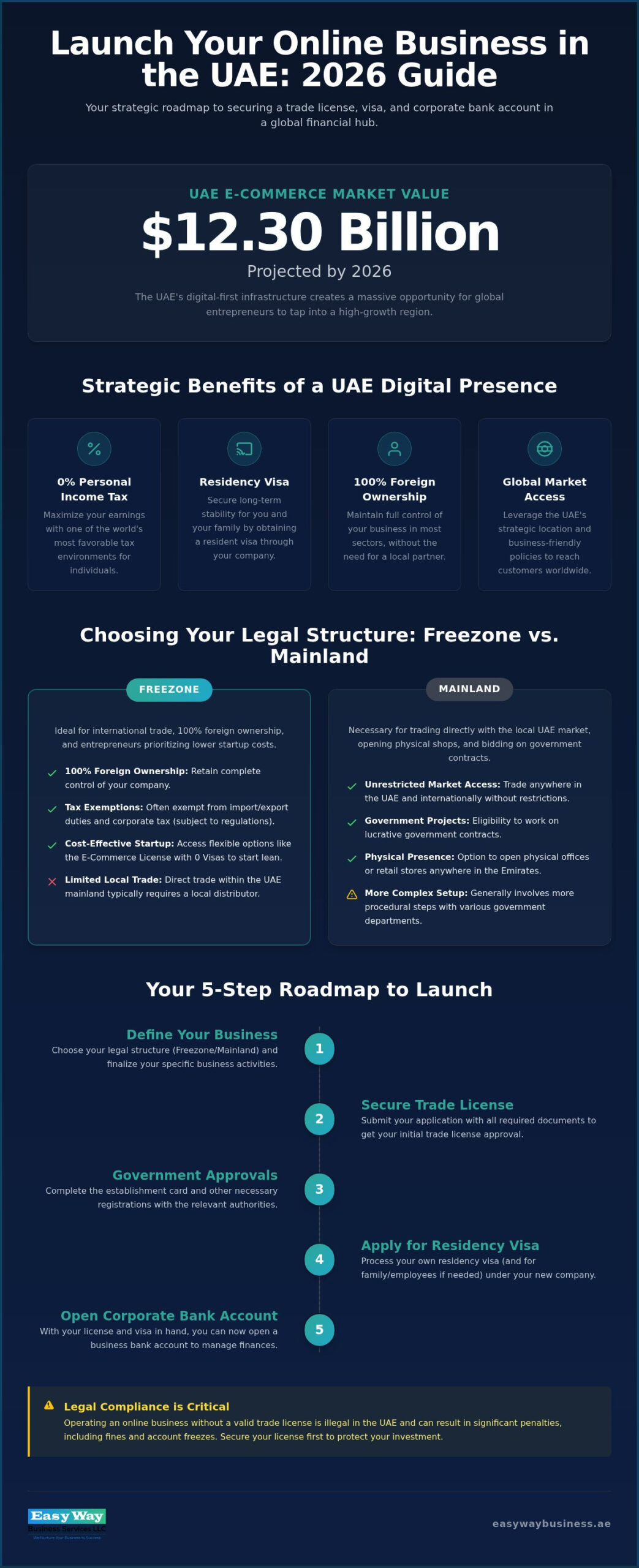
The scale of the opportunity is massive. By 2026, the UAE e-commerce market is valued at USD 12.30 billion. This isn’t just growth; it’s a fundamental change in how the national market operates. However, the authorities maintain a legal-first approach. Attempting to trade online without the correct permit can lead to significant penalties and account freezes. Starting your online business with the right legal foundation isn’t just about compliance. It’s about protecting your investment from day one.
The Strategic Benefits of a UAE Digital Presence
Setting up here offers more than just a place to trade. You gain access to a global customer base while benefiting from 0% personal income tax. One of the biggest draws is the ability to secure a residency visa through your own company, providing long-term stability for you and your family. The government has simplified the process through digital-only registration and apps like UAE Pass. This means you can handle most administrative tasks from your phone, reducing the time spent on paperwork.
Online Business vs. Traditional Brick-and-Mortar
Choosing a digital model significantly lowers your barrier to entry. Traditional shops require high physical rentals and utility costs. In contrast, an online venture focuses its budget on licensing and digital marketing. This shift in spending allows for faster testing and iteration.
- Scalability: Digital models grow faster because they aren’t limited by physical floor space or local foot traffic.
- Lower Overhead: You don’t need to pay for fit-outs or storefront maintenance, allowing you to reinvest profits into growth.
- Location Flexibility: You can manage your UAE-based company from anywhere in the world, as long as you maintain your legal status.
This flexibility allows you to test new ideas and pivot quickly. When you remove the weight of physical assets, your business becomes more agile and ready for the fast-paced 2026 market. It’s a streamlined way to enter a high-growth region without the traditional risks of long-term property leases.
Choosing the Right Legal Structure: Freezone vs. Mainland
Deciding on a legal structure isn’t just a hurdle to clear; it’s a strategic move that dictates how your online business will grow. The choice between a Freezone and a Mainland license depends on who you intend to sell to and how much physical infrastructure you need. Both paths offer unique advantages, but they serve different goals in the national market. Understanding these nuances early saves you from costly restructuring later.
Freezone licenses are the primary choice for entrepreneurs who prioritize 100% foreign ownership and international trade. These zones offer specific exemptions from import and export taxes, which is vital for businesses moving physical goods globally. If you’re just starting out and want to keep costs low, the E-Commerce License 0 Visa option is a powerful startup hack. It allows you to establish a legal entity without the immediate expense of a residency visa, giving you time to validate your business model first. As the eCommerce Market in the UAE continues to mature, having this legal flexibility becomes a significant competitive edge.
Choosing a Mainland license is necessary when you need to trade directly with the local market or bid for government contracts. While the setup process involves more steps, it removes the geographic boundaries that limit Freezone companies. Regardless of the path you choose, you must match your digital work to the correct activity codes. These codes are specific categories defined by the licensing authorities, and getting them right ensures you’re legally permitted to perform your specific type of digital work. If you’re feeling overwhelmed by the options, you can request a consultation to find the best fit for your vision.
Freezone Advantages for Online Startups
Freezones are designed for speed. In many jurisdictions, there’s no requirement for a physical office, allowing you to use a virtual address or a shared desk. This dramatically reduces your initial overhead. Many zones also have established partnerships with digital banks, which helps fast-track the process of opening your corporate bank account. Additionally, Freezones provide high levels of privacy and confidentiality for shareholders, making them ideal for investors who prefer a discreet corporate presence. For a streamlined setup, many founders look toward a Shams Free Zone package to get started quickly.
Mainland Considerations for Digital Platforms
A Mainland license offers total freedom. You can set up your office or warehouse anywhere in the country without being restricted to a specific zone. This is a major benefit for B2B online services that want to work with government entities or large local corporations. While it often involves a higher initial investment, the ability to scale without geographic limits is invaluable for long-term national expansion. You can explore our Mainland company formation services to see if this structure aligns with your long-term goals.
Profitable Online Business Ideas for the National Market
Success in the national market starts with identifying a gap that aligns with a specific license category. The UAE government encourages this innovation through frameworks that support Doing Business in the UAE, ensuring entrepreneurs have a clear path to legality. Whether you’re selling a product or a service, your online business must match its activity code to your daily operations to avoid compliance issues. This legal alignment protects your brand as you scale.
E-commerce remains the powerhouse of the digital economy. With smartphones accounting for 78.67% of transactions in 2025, a mobile-first shop is essential. Dropshipping is a popular entry point because it removes the need for inventory management. However, you still need an e-commerce license to operate legally on social media platforms like TikTok or Instagram. If you’re ready to launch, you can set up a legal online business with a dedicated license and branding package to start professional trading immediately.
Beyond physical goods, the EdTech and SaaS sectors are expanding. The regional business community is hungry for tools that simplify operations or provide specialized training. Building a SaaS product or an online course platform allows you to monetize your expertise with high margins and low recurring overhead. These models are particularly scalable because they aren’t limited by logistics or shipping times.
The Rise of Niche E-Commerce
Consumers are increasingly looking for specialized products. Eco-friendly goods have moved from a trend to a core demand in the national market. Subscription boxes are another strong model, providing recurring revenue by delivering curated experiences directly to customers’ doors. You can also build curated marketplaces that act as a bridge between local artisans and a national audience, allowing you to earn commissions without holding any stock yourself.
Service-Based Online Models
If you have specialized skills, service-based models offer the fastest path to revenue. Social media management is in high demand as traditional companies struggle to keep up with digital trends. Remote accounting and administrative support are also vital for the thousands of startups launching every year. Regional brands are constantly seeking professional content creation and ghostwriting to establish their authority, creating a steady stream of work for skilled digital professionals.
A Step-by-Step Roadmap to Launching Your Online Venture
Launching your online business involves more than just a great idea. It requires a sequence of legal and administrative steps that ground your venture in reality. Following a structured roadmap ensures you don’t miss critical compliance details that could stall your progress later. By treating the setup process as a series of logical milestones, you can move from concept to trade license with total confidence.
Step 1: Select your business activity and trade name. Your name must be unique and comply with national standards, avoiding any offensive language or references to government entities. It’s vital to match your name to your activity codes to ensure your license accurately reflects your work.
Step 2: Apply for Initial Approval. This is a formal request to the licensing authority. It confirms the government has no objection to you starting your venture. Once this is in hand, you can proceed with the legal paperwork.
Step 3: Document preparation. You’ll need to draft a Memorandum of Association (MOA) and shareholder agreements. These documents act as the legal backbone of your company, outlining ownership and operational rules.
Step 4: License issuance and visa processing. After your license is issued, you can apply for an investor or employee visa. It’s important to remember that visa approvals, government processing times, and eligibility vary based on individual circumstances and authority requirements.
Step 5: Corporate banking. This allows you to manage capital and integrate payment gateways. If you’re looking for a streamlined path, you can explore our fixed-fee business formation packages to handle these steps efficiently.
Setting Up Your Digital Infrastructure
Your domain and hosting are your digital real estate. Securing a professional domain name early protects your brand identity. Beyond the website, you need a professional logo and custom business emails. These elements build instant trust with your audience and signal that you’re a legitimate entity. Professional design isn’t just an expense; it’s a tool for credibility in a competitive market. You can start your online business with confidence by utilizing ready-made branding and hosting bundles.
Banking and Payments: The Final Hurdle
Opening a corporate account is a critical milestone for every entrepreneur. Digital-first options like Wio Bank have simplified the process, offering faster routes for online startups. To trade legally, you’ll also need to integrate payment gateways to accept credit cards and Apple Pay. Finally, ensure you understand VAT requirements. While the UAE offers a competitive tax environment, you must register for VAT if your taxable supplies exceed the mandatory threshold. Approvals for bank accounts depend on the respective financial institutions and their internal compliance checks.
Scaling and Compliance: How to Grow Your Online Business
Scaling your online business in 2026 requires a sharp focus on financial transparency and regulatory shifts. Once your digital platform is live, your priorities shift from setup to sustainable growth. This stage involves managing new tax obligations while expanding your reach in a competitive national market. Staying compliant isn’t just a legal necessity; it’s a strategy that builds long-term value for your brand.
The 2026 corporate tax landscape is a primary consideration for every entrepreneur. A standard rate of 9% applies to taxable income exceeding AED 375,000. However, a 0% rate remains in place for income up to that threshold, supporting smaller ventures. You should also be aware of Small Business Relief, which is available for resident businesses with revenue of AED 3 million or less, though this is scheduled to end for tax periods after December 31, 2026. Additionally, the mandatory e-invoicing rollout begins in July 2026, requiring robust accounting processes to stay ahead of government deadlines.
Marketing strategies must adapt to the UAE’s mobile-first consumer base. With smartphones driving over 78% of e-commerce transactions, your SEO and social media efforts should prioritize mobile performance. High-impact content on platforms like TikTok and Instagram allows you to tap into the social commerce trend, which has become a dominant force in the national market. Success here depends on consistent engagement and a deep understanding of local consumer behavior.
Professional Support for Seamless Growth
Maintaining your momentum requires ongoing administrative diligence. License renewals and government relations can become complex as your operations expand. Utilizing fixed-fee packages helps you avoid budget creep by providing predictable costs for your first year of trading. A dedicated consultant can act as your navigator, handling the logistics of visa and residency renewals so you can focus on your core product. For those looking for the most cost-effective entry point, you can explore our E-Commerce License 0 Visa for a lean start.
Future-Proofing Your Business
As your revenue grows, you may need to expand from a 0-visa license to a multi-visa structure to accommodate new hires. This transition allows you to build a local team while maintaining your legal standing. Many entrepreneurs also look toward global mobility by exploring European residency options like the Portugal D2 visa assistance we provide. This allows you to diversify your lifestyle while keeping your UAE venture as your primary digital hub. Remember that all visa and bank approvals depend on the respective authorities and financial institutions, with outcomes varying based on your specific situation.
Ready to launch? Get your online business license today with EasyWay Business Services.
Take the First Step Toward Your UAE Digital Future
Starting your online business in the UAE is no longer a complex puzzle of paperwork and legal anxiety. You now have the roadmap to choose between Freezone and Mainland structures, navigate the 2026 corporate tax landscape, and establish a secure digital infrastructure. By following these steps, you move from a digital vision to a fully licensed, scalable operation that offers both residency and financial autonomy.
Easyway Business Services acts as your streamlined navigator through every government liaison. We offer fixed-fee licensing packages, including low-cost 0-visa options, to ensure you start lean and grow fast. From initial trade name approval to opening your corporate bank account, our team provides the expert guidance needed to stay compliant with evolving national regulations. You don’t have to handle the administrative burden alone.
Launch Your UAE Online Business with EasyWay Today. Your professional journey in one of the world’s most dynamic markets is just a few clicks away. We’re ready to help you turn your entrepreneurial goals into a reality.
Frequently Asked Questions
Do I need a physical office to start an online business in the UAE?
No, you don’t necessarily need a traditional physical office to operate. Many Freezone jurisdictions offer virtual office or “flexi-desk” options that satisfy legal requirements for a business address. This allows you to run your online business with significantly lower overhead. While Mainland licenses often require a physical space, the government has introduced more flexible solutions for digital entrepreneurs in recent years to encourage innovation.
What is the cheapest online business license in the UAE?
The most cost-effective option is usually a Freezone e-commerce license with zero visa allocations. These packages are specifically designed for startups and digital nomads who don’t yet require residency for employees. Because government fees and promotional bundles change frequently, it’s best to request a current quotation. Choosing a package without visa eligibility is a common way to minimize your initial investment while remaining fully compliant.
Can I start an online business while on an employment visa?
Yes, it’s possible to start your venture while employed, but you’ll generally need a No Objection Certificate (NOC) from your current employer. This document confirms that your employer has no issues with you holding a trade license. While some Freezones have removed this requirement for certain activities, obtaining an NOC remains a standard best practice to ensure your new venture doesn’t conflict with your current employment contract.
How long does it take to get an e-commerce license in the UAE?
The process typically takes between a few days and two weeks, depending on the licensing authority you choose. Freezone setups are often faster than Mainland registrations due to streamlined digital procedures. However, exact processing times can’t be guaranteed as they depend on government approvals and the accuracy of your documentation. Having all your personal and business documents ready in advance is the best way to prevent delays.
Is an online business in the UAE subject to corporate tax?
Yes, online businesses must comply with the UAE corporate tax regime. A standard rate of 9% applies to taxable income exceeding AED 375,000, while income below this threshold is taxed at 0%. You may also qualify for Small Business Relief if your revenue is AED 3 million or less, though this relief is currently scheduled to end after December 31, 2026. We recommend consulting a tax expert for advice specific to your situation.
Do I need a separate license for each social media platform I sell on?
No, a single e-commerce license generally covers your trading activities across all digital channels, including your website, Instagram, and TikTok. The important factor is that your license activities must specifically include electronic trading or e-commerce. If you decide to expand into completely different business sectors, you may need to add those specific activity codes to your license or apply for a new permit to ensure full legal compliance.
Can I open a corporate bank account for my online business remotely?
Yes, many digital-first banks now allow you to start the application process from anywhere in the world. However, some traditional banks may still require a physical meeting or a verified signature within the UAE. It’s important to understand that bank account approval is never guaranteed. Every financial institution follows its own internal compliance checks and risk assessments, which can vary based on your business model and nationality.
What is the difference between an e-commerce license and a freelance permit?
An e-commerce license allows you to sell physical or digital goods and is a full corporate entity. A freelance permit is usually restricted to an individual offering specific services like consulting or design. If you plan to scale, hire a team, or build a marketplace, a license for your online business is the better choice. It provides more credibility with global suppliers and a more robust foundation for long-term growth.